
Most articles about EET 2.0, the new Czech electronic sales recording (elektronická evidence tržeb), are written for pubs and hair salons. An online store gets one sentence in them: payments through a payment gateway (platební brána) are not recorded. That's true. But the owner of an online store with a pickup point (výdejna) or its own delivery can easily take that to mean sales recording doesn't concern them, and that is no longer true. There's also one duty that hardly anyone writes about: if you record sales in at least one place, you report your website to the tax office (finanční úřad) as well.
In short: EET 2.0 applies from 1 January 2027 under Act No. 180/2026 Coll. Contact payments (kontaktní platby) are recorded, meaning payments made in person or at your business premises (provozovna), whether in cash, by card or by QR code. Cash is always recorded. A payment through a payment gateway, a bank transfer made from home and cash on delivery (dobírka) that the carrier collects and sends to your account are not recorded. An online store that takes payments at its own pickup point or on its own delivery does have to record sales, and in DIS+, the online tax information box, it also reports the website itself as a recording unit (evidenční jednotka). The fine for a sale that isn't sent is up to CZK 500,000. Below we go through the situations one by one, and at the end we show how to connect sales recording directly to an online store or a booking system.
A note up front: we're developers, not tax advisors. We work from the act, the eet.gov.cz website and the technical documentation of the Financial Administration (Finanční správa) as they stood on 29 November 2026. For borderline cases, get confirmation from an accountant or a tax advisor.
What EET 2.0 is and when it starts
EET 2.0 is the new system of electronic sales recording. It is introduced by Act No. 180/2026 Coll., on the recording of sales (in Czech), which was published in the Collection of Laws (Sbírka zákonů) on 7 October 2026 and takes effect on 1 January 2027. The first EET was rolled out in waves by sector. This one starts for everyone on the same day. The explanatory memorandum (důvodová zpráva) estimates that it will affect roughly 600,000 businesses, and it explicitly lists online stores without brick-and-mortar premises among those it may not apply to.
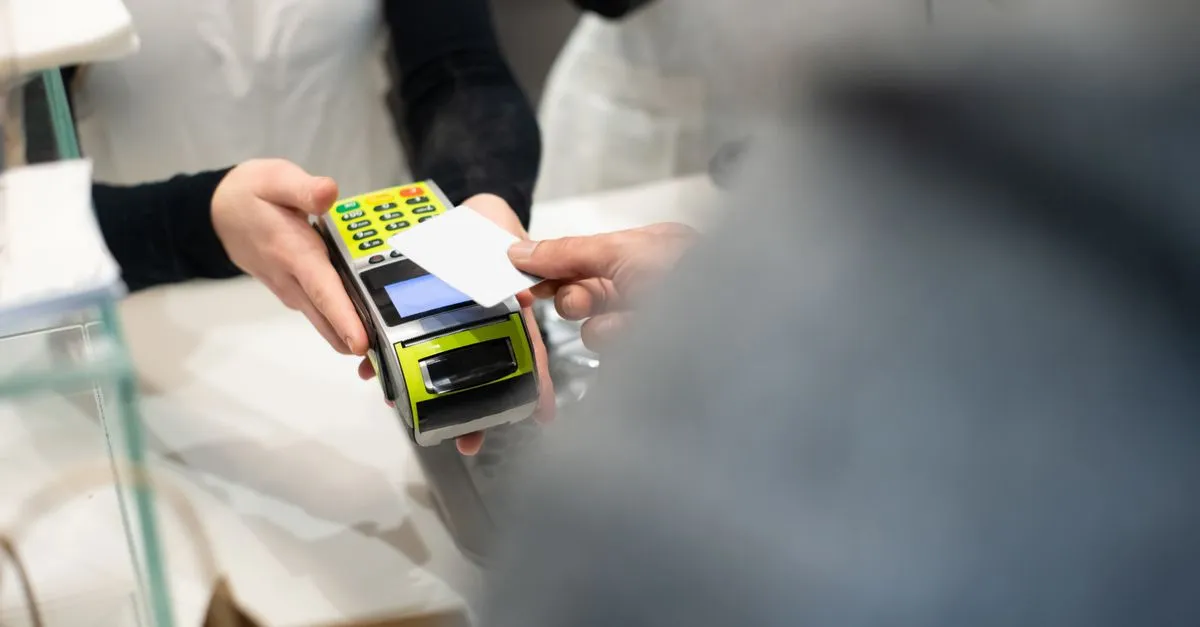
Four things have changed since the recording that ran from 2016 to 2022. Only contact payments are recorded, so invoices paid by bank transfer are out. Less data is sent: the total amount, the time and a few identifiers, with no line items and no VAT. The act on the recording of sales doesn't require you to issue a receipt, although other rules may still require one, typically the VAT Act and consumer protection law. And the state offers its own free application, MOJE eet.
| Date | What happens |
|---|---|
| 1 July 2026 | Playground test environment for developers |
| 1 November 2026 | EET 2.0 in DIS+ on the MOJE daně portal: recording units and cash register certificates (pokladní certifikát) |
| 1 December 2026 | Planned launch of the free MOJE eet application |
| 1 January 2027 | Mandatory sales recording begins |
| 11 January 2027 | Last day to sign up for the EET OFF regime for 2027 |
The Financial Administration calls January 2027 a pilot phase, but adds straight away that it will already be standard recording. We don't read that as a postponement and we advise against counting on one. The timeline is still being updated, so check the dates before the end of the year.
Who EET 2.0 applies to
Sales recording applies to income tax payers, both individuals and legal entities. The act has no turnover threshold, and it doesn't look at your sector or at whether you're a VAT payer. It only looks at how you take money from customers.
A payment is recorded when it meets three conditions at once: it is a contact payment, it is business income and no exemption applies to it. Section 6 of the act defines a contact payment in two ways. Either it takes place during personal contact with you or your employee, or it is made at your business premises or in your vehicle in connection with the supply of goods or a service. The payment method plays no role. Cash, card, QR code, a bank transfer entered at the counter, meal vouchers and gift cards all count. Cash has a special status and is recorded even when there is no personal contact.
Sole proprietors in the first band of the flat-rate tax (paušální daň), with income of up to CZK 1 million a year, have one more option, the EET OFF regime. For a surcharge of CZK 1,400 a month on top of the flat-rate advance payment, they don't have to record at all. For 2027 you have to sign up by 11 January 2027, and a later notification has no effect. A limited liability company (s.r.o.) doesn't have this option. Individuals who do start recording can claim a one-off tax credit of up to CZK 5,000 for the first year.
EET 2.0 and online stores: which payments are recorded
With an online store, it pays to go through the payment methods one at a time. The table is based on the act and on the guidance at eet.gov.cz.
| Situation | Recorded? | Why |
|---|---|---|
| Payment by card or bank transfer through a payment gateway | No | Remote payment with no personal contact |
| Invoice or QR code paid from home or the office | No | Remote payment |
| Cash on delivery that the carrier collects and sends to your account | No | Exemption for a payment handled as a postal service |
| In-person pickup of an order paid for online in advance | No | The payment was made remotely, nothing is paid at the pickup point |
| In-person pickup with payment at the pickup point in cash, by card or by QR code | Yes | Payment at your business premises |
| Your own delivery, the driver takes cash or card | Yes | Personal contact with your employee |
| Cash at a market or at the customer's location | Yes | Cash is always recorded |
| Refund of a sale that was recorded | Yes | Recorded as a negative sale |
A purely online store stays in the top half of the table, and that is where EET 2.0 ends for it. For everyone else, there are a few spots where it's easy to slip up.
With cash on delivery, the exemption depends on the carrier collecting the money as part of a postal service and sending it to your account by bank transfer. Check the register kept by the Czech Telecommunication Office to see that your carrier is among the postal service operators. The official website doesn't say explicitly how cash on delivery paid at a carrier's pickup point is treated. We read it the same way as cash on delivery at the door, but only a tax advisor can give you certainty.
Watch out for the QR code at the counter. When a customer is standing at your pickup point and pays by QR code or by a transfer from their banking app, the payment takes place at your business premises and it is a contact payment. The same QR code paid from the couch that evening is not recorded. The code is the same in both cases. The only thing that differs is where the customer pays.
Split payments are assessed part by part. The Financial Administration showed this with an example at a seminar for developers: out of a price of CZK 1,000, the customer pays CZK 200 by card at the business premises and CZK 800 the next day by bank transfer from home. Only the CZK 200 is recorded. For an online store, it follows that a deposit paid online is not recorded and the balance paid at the pickup point is. If you're still choosing a gateway, we have a separate comparison of payment gateways for Czech online stores.
Bookings, deposits, vouchers and credit
Websites that take bookings, meaning hotels, salons, sports venues or rental shops, follow the same rule. A stay or an appointment paid for in advance through the website is not recorded. A payment at reception or after the service is recorded, cash and card alike.

Vouchers and credit are more complicated. With a voucher for a specific service, a massage for instance, only the sale of the voucher is recorded, and only if the customer bought it with a contact payment. Redeeming such a voucher is no longer a payment. Credit, passes and prepaid cards work differently: the top-up and every use are both recorded if they happen as contact payments, and the data message has special fields for them. A security deposit is recorded only once you use it to cover a payment, and only if the customer paid it as a contact payment. If you have loyalty credit or gift cards that work both on the website and in the shop, map it out case by case. This is where mistakes are easiest to make.
The website as a recording unit
We only ran into this when we read the act. It introduces the term recording unit, meaning a place where you sell. It can be business premises, a vehicle, or you yourself if you work at customers' locations. Under Section 3, though, a website or an application that gives access to goods or services is one too.
Anyone who records sales in at least one unit has to report in DIS+ all the units they sell through, including those where nothing is recorded. The Financial Administration's leaflet on recording units says it directly: the notification also covers websites used for selling alongside brick-and-mortar premises. So an online store with a pickup point reports both the pickup point and the online store. For the website, you fill in the URL and mark that you only take payments through it that are not recorded.
Changes are reported within 15 days. A new domain, a second online store, a closed pickup point or a stall at a Christmas market all have to appear in DIS+. It looks like a formality, but it is a formality with a deadline. The reverse holds too: if you take no recorded payments, you report nothing and EET 2.0 doesn't apply to you.
What to do by 1 January 2027
- Go through how your customers pay you. Look for cash, payments at a pickup point, delivery in your own vehicle, a showroom and sales at events. If you find nothing, you're done.
- Activate EET in DIS+ on the MOJE daně portal. You can log in with a bank identity, for example. Getting access to the box can take up to 48 hours, so don't leave it until New Year's Eve.
- Report your recording units. All of them, including the website.
- Generate a cash register certificate. It's free, you download it as a .p12 file with a password and it is valid for 366 days. A certificate from the old EET can't be used.
- Choose what you will record with. We compare the options right below this list.
- Test it before the New Year, including an internet outage and a refund.
What to record with: MOJE eet, a cash register or a connection to your online store
| Solution | Who it suits | What to watch out for |
|---|---|---|
| MOJE eet | A few contact payments a week. A free web application from the state where you enter sales by hand in the browser. | At most 2 recording units, 4 authorized staff and 42 items in the catalog. Not a good fit as the main cash register for VAT payers. |
| Cash register system | A shop or pickup point with regular trade at the counter. | Ask your supplier when they will release the update for EET 2.0. Without it, an old cash register won't record. |
| Connection to an online store or your own system | You already keep orders in an online store, a booking system or an internal application and don't want to retype them somewhere else. | Someone has to program it, test it and then keep an eye on the certificate. |
Our view: if five people a week pay at your pickup point, don't program anything and use MOJE eet. A connection starts to pay off once staff are entering every payment twice, first into the order in the online store and then into the cash register. That costs time, and with double entry it's easy for a sale to be recorded with a different amount, or not at all.
On hosted platforms such as Shoptet, ask the provider directly what it is preparing for EET 2.0. With WooCommerce and custom-built online stores, nobody will sort it out for you. You either reach for a third-party plugin or for a custom integration.
What an EET 2.0 integration into your own system looks like
Technically it is one web service with one operation. Your system sends the sale data and gets back a confirmation code, which the Financial Administration calls POK. The interface is described in the developer documentation: SOAP 1.1, XML, a WS-Security signature and communication over HTTPS with TLS 1.2 or higher. We weren't pleased to see that it's still SOAP in 2027. At least it is the same technology as the first EET, so anyone who integrated that one knows what they're getting into. But pointing an old plugin at the new address isn't enough: the interface is at version 4.1, the old EET ended at 3.1 and the changes are incompatible.
One message carries seven pieces of data:
- the taxpayer's recording identification number, which is your tax ID (DIČ),
- the identifier of the recording unit,
- the identifier of the cash register device (pokladní zařízení),
- the sequence number of the sale,
- the date and time of the sale,
- the total amount in Czech crowns,
- the identification of the data message.
Cart items, VAT rates and customer data are not sent. Calling the service is the easier part. This is what takes the time:
The biggest chunk of work is outages. You have to send the sale no later than when you accept the payment, and your system waits at least 2 seconds for a reply. If none comes, you complete the sale and send it as soon as you can, within 48 hours at the latest. That is why an online store needs a queue of unsent sales and automatic retries. The operational documentation also plans for a regular maintenance window, usually in the night from Thursday to Friday, so the queue will be used routinely.
Retries are easy to get wrong. The second attempt has to carry the same sale data, including the sequence number and the time. Only the message header changes. That data is how the Financial Administration can tell it is the same sale. If the system generates it again on a retry, a second sale appears in the records.
Cancellations and refunds are recorded as a sale with a negative amount. The store's admin panel has to be able to do this for orders that were originally recorded, and must not do it for those paid through the gateway.
Then there is the certificate. Every message is signed with it, so it belongs on a server with restricted access. The specification does allow calling the service straight from the browser, but we don't want a private key sitting in a staff member's browser. The certificate expires after 366 days. It can be renewed automatically through the certificate authority's interface, and the Financial Administration recommends doing that two to three weeks ahead. A system that doesn't plan for this will one day stop recording.
You can test in advance. The Playground test environment has been running since July 2026, and even in production you can send a message in verification mode, which records nothing.
Fines and inspections
For breaching the duty to send sale data, the tax office can impose a fine of up to CZK 500,000 under Section 24. The same upper limit applies to anyone who seriously obstructs or frustrates the recording. A customs office (celní úřad) can also issue the fine on the spot. Closing down the business premises, which the old EET allowed, is not in the new act.
The act speaks of automated gathering of information about sales. In our view, a pickup point that is reported in DIS+ and doesn't send a single sale for months will be visible even without a test purchase.
What we can help you with
We start with the cheapest thing. We go through your payment methods with you and tell you whether EET 2.0 applies to you and whether MOJE eet would be enough. This consultation is free, and it can easily end with you not having to program anything.
When a connection does make sense, we build it as a system integration. The sale is sent the moment staff mark the order in the admin as paid on site. It comes with a queue for outages, refunds, monitoring of the certificate's validity and an overview of sent sales with their confirmation codes. We connect online stores on WooCommerce and custom-built ones, booking systems and web applications. System integration with us starts at €1,000, we are not VAT payers and we send a fixed-price quote within 48 hours of the consultation.
We don't do tax advice. Whether EET OFF pays off for you and how to treat a borderline type of payment is for your accountant to say. We see to it that the system sends what the two of you agree on. Write to us and tell us what your online store runs on and how your customers pay on site.