


Early in our studio's history, we designed a website for a premium pet food brand based on the founder's description of their typical customer: a young, urban professional who treats their dog like family. When we reviewed the analytics six months after launch, we discovered that the majority of actual buyers were women over fifty living in suburban areas who found the brand through veterinary recommendations, not Instagram ads. The persona we designed for bore almost no resemblance to the real customer. That gap between assumption and reality is exactly what data-driven personas address.
Why personas matter
Personas give design teams a shared reference point. Instead of designing for an abstract "user," you design for a specific, named character with defined goals, frustrations, and behaviors. This focus prevents the common trap of trying to please everyone — a strategy that usually produces a site that resonates with no one.

Traditional personas are often built on intuition and stakeholder interviews. The marketing director describes who they think the customer is. The sales team shares anecdotes. A composite character emerges that feels plausible but may not reflect actual user behavior. Data-driven personas replace that intuition with evidence — analytics, surveys, and behavioral data used to construct portraits grounded in what users actually do.
Building personas with data
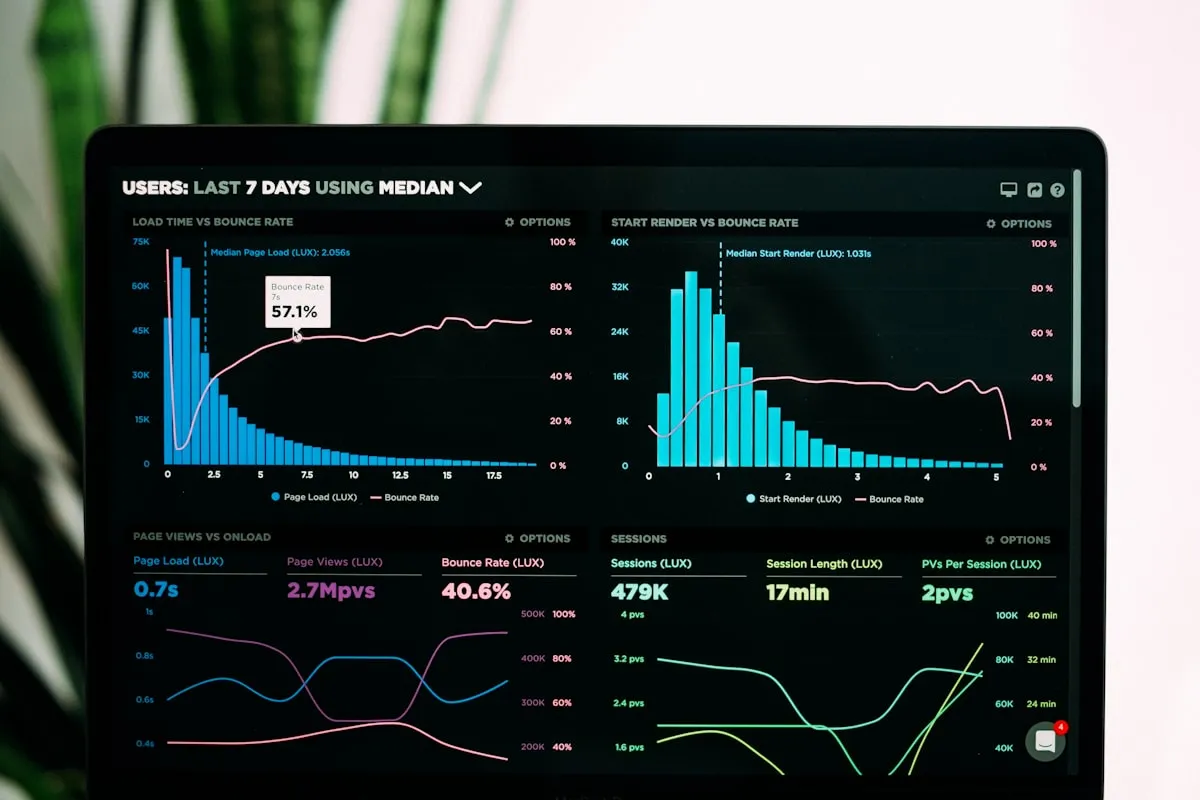
Start with quantitative data. Google Analytics demographic and interest reports, CRM data, purchase histories, and social media audience insights provide a statistical foundation. Look for patterns: which age groups convert at the highest rate? Which geographic regions generate the most traffic? What devices and browsers dominate your user base?
Layer in behavioral data. Session recordings and heatmaps reveal how users actually navigate your site, which often differs from how they describe their behavior in surveys. Identify common paths, frequent drop-off points, and features that attract the most interaction. Segment by meaningful categories: new versus returning visitors, high-value versus low-value customers, mobile versus desktop users.
Complement quantitative findings with qualitative research. User interviews, open-ended survey responses, and support ticket analysis add texture and motivation to the numbers. A data point might tell you that 40% of users leave the pricing page within ten seconds. An interview reveals that they find the plan comparison confusing and leave to look for simpler alternatives. Together, these sources build a persona that is both statistically representative and emotionally resonant.
For a B2B client in the industrial equipment sector, we identified three distinct personas through this process: a procurement officer who needed detailed technical specifications, an operations manager who cared primarily about delivery timelines and support availability, and a C-level executive who only visited the site to compare pricing at a high level. Each persona had different content needs, different navigation patterns, and different conversion triggers - insights that fundamentally shaped the site architecture.
Putting personas to work
A persona sitting in a slide deck does nothing. Personas need to be integrated into everyday design decisions. At Kosmoweb, every major design review includes a persona check: would this layout serve Jana the procurement officer? Does this content address Tomáš the operations manager’s primary concern?
Personas inform information architecture — they clarify what each user group needs and in what order. They guide visual hierarchy by establishing which elements deserve prominence on a given page. They shape copy by defining the vocabulary, tone, and technical depth that resonates with each segment.
We also use personas to prioritize when resources are tight, which is always. If 70% of revenue comes from a persona that primarily uses mobile, responsive performance for that group takes priority over desktop refinements for a lower-value segment. Personas make that argument concrete rather than political.
Testing and updating personas
Personas are hypotheses, not facts. They need validation. We run usability tests with participants recruited to match each persona profile and watch whether the design assumptions hold. If we built a site around the assumption that procurement officers want technical specs upfront, but test participants consistently ignore those sections, the persona — or the design response to it — needs revision.
A/B testing adds quantitative validation. Create page variants tailored to different personas and measure performance by segment. If the persona-driven layout outperforms the generic one for the target group, the persona is earning its place. If not, go back to the data.
User behavior changes. Markets shift. Products expand into new segments. A persona built two years ago may not reflect your current audience at all. We run a full persona review every twelve months, with lighter quarterly check-ins comparing current analytics against persona assumptions.
Watch for signals: unexpected demographic shifts in analytics, new customer segments appearing in your CRM, changes in the most common support questions, significant shifts in device usage. When these appear, your personas need to catch up.